

In the digital world, the concept of a contract is being fundamentally reinvented. For centuries, a contract has been a paper document signed by two or more parties, a legal agreement that is enforced by a court of law. Today, that model is being challenged by the rise of smart contracts, self-executing agreements with the terms of the agreement directly written into lines of code. Built on the secure and transparent foundation of blockchain technology, smart contracts have the potential to automate a variety of legal processes, from financial transactions and property transfers to insurance claims and supply chain management. This is not just a technological innovation; it is a profound legal revolution that is forcing a re-evaluation of our understanding of contracts, trust, and enforceability. This extensive guide is designed to demystify the legal landscape of smart contracts, providing a comprehensive roadmap for beginners and professionals alike to understand their potential, their limitations, and the critical issues that will define their future.
The Fundamental Difference

To truly understand the legal implications of a smart contract, you must first understand how it differs from a traditional legal contract. The two are not mutually exclusive; in fact, they can work in tandem.
A. Traditional Contract
- Nature: A legal document, typically written in natural language (English, etc.).
- Execution: Relies on human interpretation, trust, and a legal system for enforcement.
- Flexibility: Can be ambiguous and is often subject to judicial interpretation.
- Trust: Relies on the trust that both parties will honor the agreement.
B. Smart Contract
- Nature: A piece of code that runs on a blockchain.
- Execution: Self-executing and automated. The code itself enforces the terms of the agreement.
- Flexibility: Is rigid and deterministic. The code will execute exactly as it is written, with no room for ambiguity or interpretation.
- Trust: Relies on the trust that the blockchain is secure and that the code is bug-free.
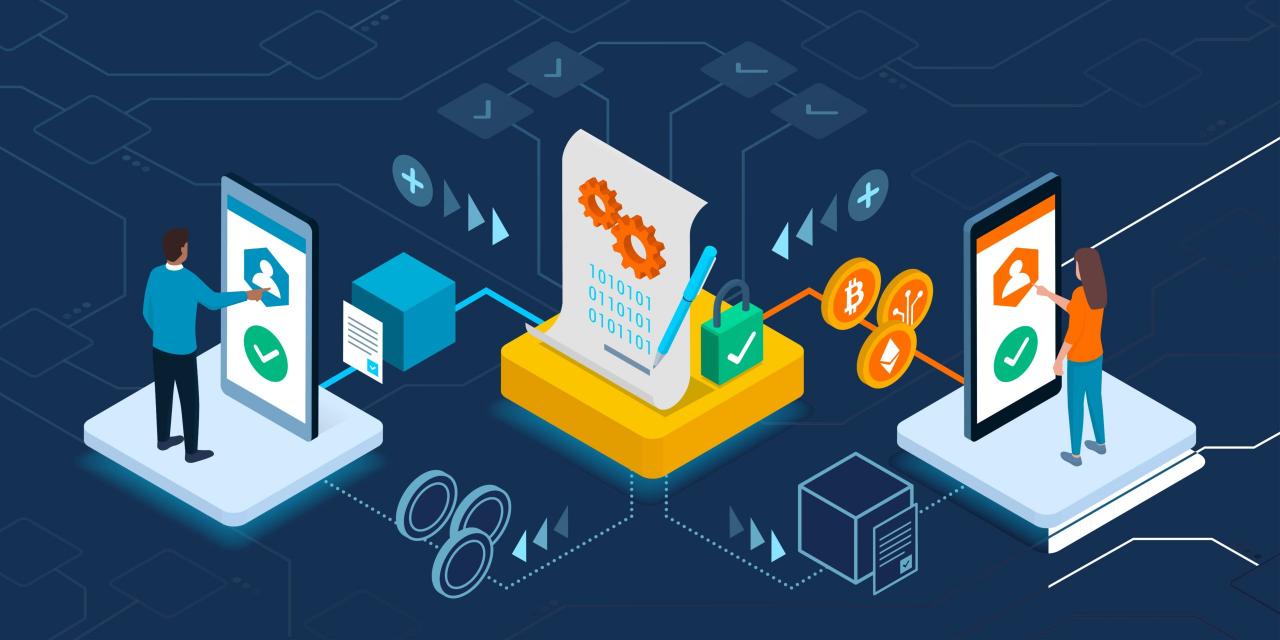
The core difference is that a smart contract removes the need for a third-party intermediary, such as a lawyer or a court, for enforcement. The contract executes itself when a pre-determined condition is met, a process that is both transparent and immutable on the blockchain.
The Legal Validity of a Smart Contract
This is the central legal question surrounding smart contracts: are they legally binding and enforceable in a court of law? The answer, at present, is complex and varies by jurisdiction.
- A. The Essential Elements of a Contract:To be legally binding, a traditional contract requires several essential elements: an offer, an acceptance, a mutual agreement (or “meeting of the minds”), and a consideration (something of value exchanged). A smart contract can technically contain all these elements, but its code-based nature introduces new legal complexities. For example, a court may not have the technical expertise to interpret the code, and a smart contract’s rigid nature may not allow for the nuances of human intent.
- B. The Need for a Hybrid Approach:The most common legal strategy today is to use a hybrid contract. This is a traditional legal contract that is linked to a smart contract. The legal contract, written in natural language, contains the essential terms of the agreement and provides a clear legal framework. The smart contract, meanwhile, automates the most deterministic parts of the agreement, such as a payment or a data transfer. In case of a dispute, the legal contract provides a clear path for a court to make a ruling, and the smart contract provides a transparent and immutable record of the transaction.
- C. The Role of Oracles:A smart contract can only execute when a pre-determined condition is met. However, a blockchain is a closed system that cannot interact with the outside world. This is where an “oracle” comes in. An oracle is a third-party service that provides a smart contract with real-world data, such as a stock price, a weather report, or a sports score. The legal validity of a smart contract can depend on the reliability and security of the oracle that is providing the data. If the oracle is compromised, it could lead to an incorrect execution of the contract.
The Legal Challenges and Pitfalls
While the potential of smart contracts is immense, they are not without their legal challenges and pitfalls. A lack of understanding of these issues can lead to costly mistakes.
- A. The Problem of Ambiguity and Bugs:A traditional contract can be ambiguous, and a court can interpret the intentions of the parties involved. A smart contract, on the other hand, is deterministic. The code will execute exactly as it is written, with no room for interpretation. A bug in the code can lead to an unintended execution, with no legal recourse to reverse it. The infamous DAO hack, where a bug in a smart contract led to the loss of millions of dollars, is a stark reminder of this risk.
- B. Jurisdiction and Applicable Law:A smart contract can be executed by parties in different countries, and the blockchain is a global, borderless network. When a dispute arises, which country’s laws apply? This question of legal jurisdiction is a central challenge that must be addressed. A hybrid contract can help to solve this by including a clause that specifies the applicable law and the jurisdiction for a dispute.
- C. The Challenge of Identity:A smart contract operates on a decentralized network where the identity of the parties is often pseudonymous. In a traditional legal system, the identity of the parties is a fundamental element of a contract. The lack of a clear identity can make it difficult to enforce a contract in a court of law.
- D. The Immutability of the Blockchain:The immutability of the blockchain is one of its greatest strengths and a significant legal challenge. Once a transaction is recorded on a blockchain, it cannot be altered or reversed. This is a problem in cases of fraud, error, or an unintended execution. While this immutability provides a high level of security, it also presents a new and complex challenge for a legal system that is built on the principle of judicial remedy.
The Future of Smart Contracts in Practice
The future of smart contracts is being shaped by their adoption in a variety of industries, each with its own unique legal challenges and opportunities.
- A. Finance and Banking:Smart contracts can automate a variety of financial processes, from lending and borrowing to the issuance of new securities. They can be used to create decentralized financial products that are more transparent and efficient than their traditional counterparts.
- B. Real Estate and Property Transfers:A smart contract can automate the transfer of property ownership. It can be used to create a transparent and secure record of a property transfer, and it can eliminate the need for a variety of intermediaries, such as a notary or a land registry.
- C. Supply Chain Management:Smart contracts can be used to automate a variety of supply chain processes, from the tracking of goods to the payment of suppliers. This can lead to a supply chain that is more transparent, efficient, and secure.
- D. Insurance and Claims Processing:A smart contract can automate the processing of an insurance claim. When a pre-determined condition is met, such as a flight delay or a weather event, the smart contract can automatically issue a payment to the policyholder, eliminating the need for a human to process the claim.
The Role of Legal Professionals
The rise of smart contracts will not replace lawyers; it will transform their role. Lawyers of the future will be a bridge between the legal and the technological world.
- “Smart Contract” Lawyer:A new type of lawyer, a “smart contract” lawyer, will emerge. They will have a deep understanding of both law and code, and they will be responsible for drafting and reviewing smart contracts to ensure they are both legally sound and bug-free.
- The “Human-in-the-Loop”:The future of legal AI will not be fully automated. There will always be a need for a human-in-the-loop, a legal professional who can interpret the nuances of a case, negotiate on behalf of a client, and make a judgment call that an AI cannot.
- The Proactive Legal Strategist:The future lawyer will be a proactive legal strategist, working with businesses to identify and mitigate the legal risks of new technologies. They will help companies to navigate the complex regulatory landscape of the digital world and to build a legal framework that is both innovative and compliant.
Conclusion
Smart contracts are a groundbreaking technological innovation that has the potential to fundamentally reinvent the legal world. By automating the execution of legal agreements on a secure and transparent blockchain, they promise to make legal processes more efficient, affordable, and accessible than ever before. This is not a futuristic concept; it is a present-day reality that is already being adopted in a variety of industries.
However, the journey to a smart contract-driven future is not without its challenges. The legal validity and enforceability of smart contracts are still a gray area, and the risks of a bug in the code, a lack of legal jurisdiction, and the immutability of the blockchain are significant. The key to navigating this landscape is a proactive and strategic approach. By using a hybrid contract that combines a traditional legal agreement with a smart contract, and by working with a legal professional who has a deep understanding of both law and code, businesses can mitigate these risks and harness the immense potential of this new technology.
Ultimately, the future of smart contracts is a story of a legal profession that is evolving to meet the demands of a new era. It is a future where the lawyer is not a gatekeeper but a strategic partner, working with clients to build a legal framework that is both innovative and compliant. The road ahead is a long one, but with a commitment to a proactive and ethical approach, the legal profession has the opportunity to lead the way in a new era of legal innovation, making justice more accessible and more effective for everyone. The time to begin this journey is now, and your future self will thank you for it.